
Ask "how much does a website cost?" and the answers vary enormously. In Turkey, as elsewhere, quotes sold under the same "corporate website" label range from inexpensive template sites to projects that cost many times more. The difference usually lies not in the price tag but in what the quote covers.
In this article we go through the factors that determine the price of a website one by one. We also share the approximate ranges we use in 2026 when quoting for clients outside Turkey, in US dollars and euros. With our team based in Ankara, we can usually offer custom design for well below what agencies in the US or the UK charge.
Prices are approximate ranges as of October 23, 2026, and exclude VAT. The final price is set in a written quote once the scope is clear.
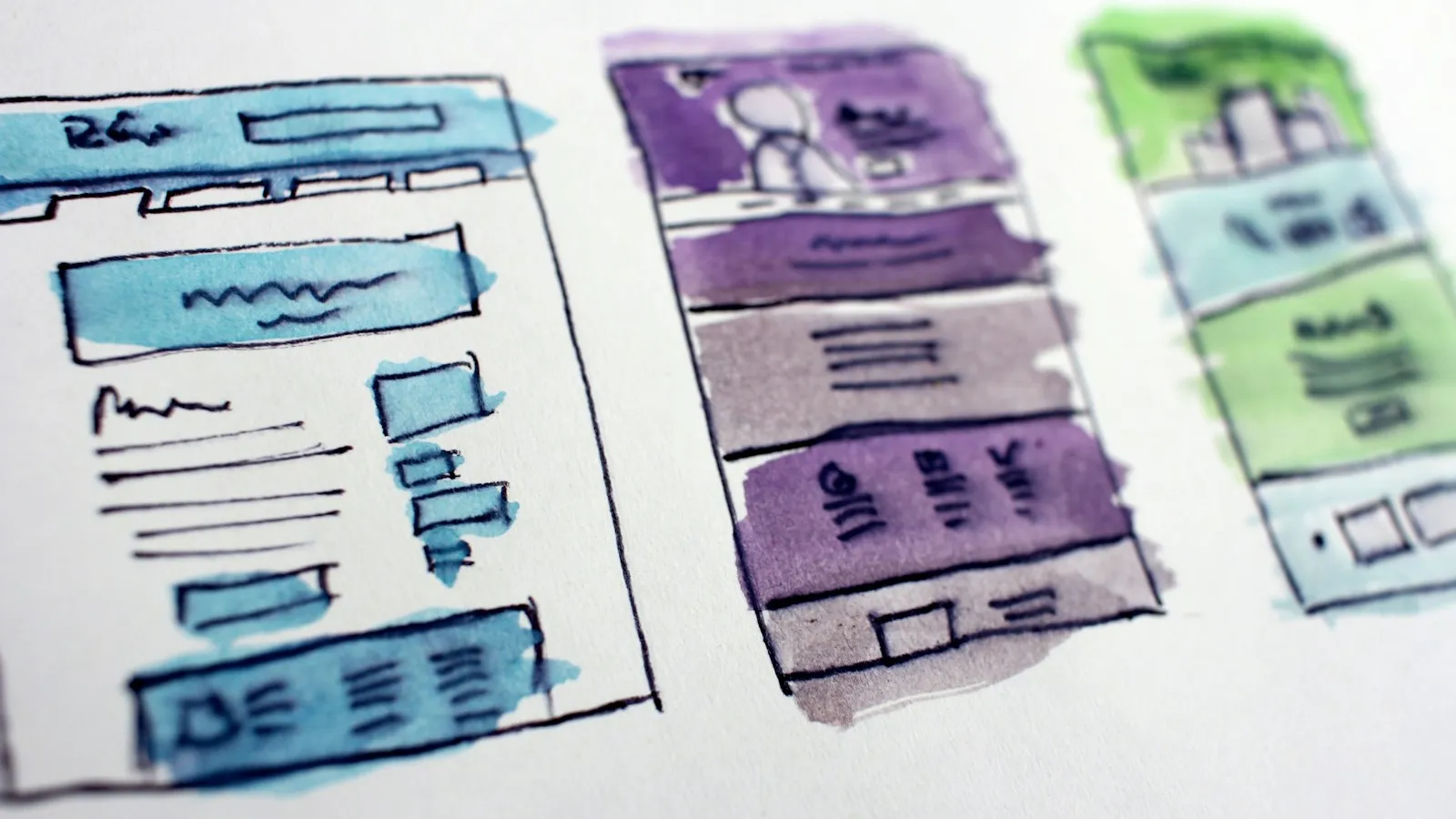
Approximate price ranges for 2026
| Type of site | Typical scope | Approx. price (USD) | Approx. price (EUR) |
|---|---|---|---|
| Brochure website | 1–5 pages, one language, contact form, basic SEO setup | 900–1,800 | 800–1,600 |
| Corporate website | 6–15 pages, content management system (CMS), blog or news section, cookie consent, analytics | 2,200–5,000 | 1,950–4,450 |
| Multilingual or custom-feature site | Two or more languages; membership, dealer or quote request forms; ERP or CRM integration | 5,000–12,000 and up | 4,450–10,700 and up |
Euro amounts are converted at the October 2026 exchange rate (1 euro ≈ 1.12 US dollars) and rounded. The ranges are for custom design. Sites built on ready-made templates can come in below them; we don't use templates and design every site from scratch.
The factors below explain why the ranges are so wide. Where a project falls in the table usually becomes clear in the first call.
What determines the price
Number of pages and site structure
Every page means design, content layout, mobile responsiveness and testing. But the real work lies less in the number of pages than in building the structure: which pages there will be, how the menu is organized and which path visitors take to the contact form. A well-planned eight-page site usually performs better than thirty pages added haphazardly.
Ready-made template or custom design?
Ready-made templates are cheap and quick to set up. On the other hand, they look like other sites, carry code for many features you never use and are hard to change later. With custom design, the interface is drawn from scratch around your brand and what visitors need to do on the site. Most of the price difference between quotes comes from here.
Content management system (CMS)
If you want to update the text and images yourself, the site is built with a content management system. The scope covers which areas can be edited, how many people can log in and with which permissions, and what training is provided. For a business whose content rarely changes, having updates done as part of maintenance can be simpler and cheaper.
Number of languages
Each new language is more than a translation. Menus, forms, error messages and legal pages multiply too; each language gets its own page titles and descriptions, plus hreflang tags that tell search engines which page is in which language. A second language usually adds to the content and testing budget rather than the design budget. Who provides the translation is a separate item.
Custom features and integrations
Almost every site has a simple contact form. The features that really raise the price are member and customer portals, dealer or quote request forms, appointment booking, online payment and connections to ERP, CRM or accounting software. For example, having product and stock data flow in automatically from the ERP greatly reduces manual updating, but it requires a separate integration project. We describe these connections in detail on our ERP integration page.
Content: text, photos and video
One of the biggest differences between quotes is who provides the content. If you supply the text and images, the cost goes down. If copywriting, product photography or a promotional video is also needed, these are separate items. If stock photos will be used, check the license terms from the start.
Speed, search engine foundations and accessibility
For a site to be found on Google, the technical foundations have to be right: a unique title and description on every page, a clean heading order, a sitemap and structured data. Google uses Core Web Vitals when assessing page experience and indexes sites based on their mobile version. A site that is slow or broken on a phone starts out behind. Accessibility (sufficient color contrast, keyboard navigation, alternative text for images) is part of the job too.
These items are often invisible in a quote, but they are also the ones most often missing from cheap quotes. We have collected what a good business website should have in the checklist on our web design page. SEO work after launch (content, links, measurement) is separate and ongoing; no one can guarantee rankings.
Privacy, security and backups
Any site that collects personal data, for example through a contact form, needs a privacy notice. In Turkey, this follows from the obligation to inform in Article 10 of Personal Data Protection Law No. 6698 (KVKK); where the General Data Protection Regulation (GDPR) applies, Article 13 sets out the information to be provided.
If analytics or advertising cookies are used, cookie consent should be set up as well. According to the cookie guide of Turkey's Personal Data Protection Authority, visitors' explicit consent should be obtained for most non-essential cookies; in the EU, the ePrivacy rules (Article 5(3) of the ePrivacy Directive) require consent for cookies that are not strictly necessary. On the technical side, this means measurement scripts do not run until the visitor consents. We recommend preparing the legal documents with your legal counsel; this section is general information, not legal advice.
On the security side, an SSL certificate, up-to-date software components and regular backups are the basics. If something goes wrong, it should be possible to restore the site within minutes.
Hosting, maintenance and support
Some costs continue after the site goes live. Approximately:
- Domain name: usually under $20 a year for extensions such as .com and .com.tr.
- Hosting and maintenance: about $300–$900 a year (€270–€800), depending on traffic, backup frequency and the scope of support.
- SSL certificate: free on the sites we host; backups are taken daily.
What to watch for in a cheap quote
A low-priced quote is not always a bad one, but you need to know what it leaves out. Ask these questions when you request quotes:
- Whose name will the domain be registered in? The domain should be registered in your name, not the vendor's; otherwise switching vendors becomes difficult.
- Will you have access to the files and the admin panel? You should be able to access the site files, the database and the admin panel. In our projects, the full source code is yours.
- Is the "custom design" really custom? Changing the colors of a purchased template is not custom design.
- What is included and what is not? Content entry, number of revision rounds, additional languages, training and post-launch support.
- What will you pay in year two? Ask what hosting or maintenance shown as free in the first year costs in later years.
- Will speed and mobile performance be measured? Ask for a Google PageSpeed Insights or Lighthouse report at handover.
How a quote is prepared
Discovery call
We talk about your goals, your visitors and your budget. The first call is free.
Scope and sitemap
Pages, languages, features and who provides the content are defined.
Written quote
Scope, timeline and price are itemized; what is included and what is not are listed separately.
Design and development
The approved design is coded and the content is added; speed and mobile tests are run.
Launch and support
The site goes live, analytics is connected and a short training session is given.
How long does it take to build a website?
It depends on the scope. Brochure websites usually go live in 2–3 weeks and corporate websites in 4–8 weeks; multilingual projects with integrations can take 2–4 months. What delays the schedule most is usually late content, so we recommend starting to prepare the text and images during the design phase.
Frequently asked questions
Why are the prices in dollars and euros rather than Turkish lira?
Turkish lira prices go out of date within a few months because of exchange-rate movements and inflation; ranges in US dollars or euros stay valid longer. The quote states clearly which currency and which exchange rate it is based on.
Do the prices include VAT?
No. The ranges in this article exclude VAT.
Is a one-page website enough?
For an event, a campaign or a newly founded business, a single page can be a good start. But if you want to be found in search engines for more than one service, each service needs its own page.
Can we expand the site later?
Yes. If the site is built with the right structure, new pages, languages or features can be added later. That is why we recommend a structure that allows for growth from day one.
If you would like a clear figure for your own project, get in touch; the first call is free.
Sources
- Google Search Central: Core Web Vitals
- Google Search Central: Mobile-first indexing best practices
- Personal Data Protection Law No. 6698, English translation (KVKK)
- Law No. 6698, official Turkish text (mevzuat.gov.tr)
- KVKK: Guide on cookie practices (in Turkish, PDF)
- General Data Protection Regulation (GDPR), Regulation (EU) 2016/679 (EUR-Lex)
- ePrivacy Directive 2002/58/EC, consolidated version (EUR-Lex)